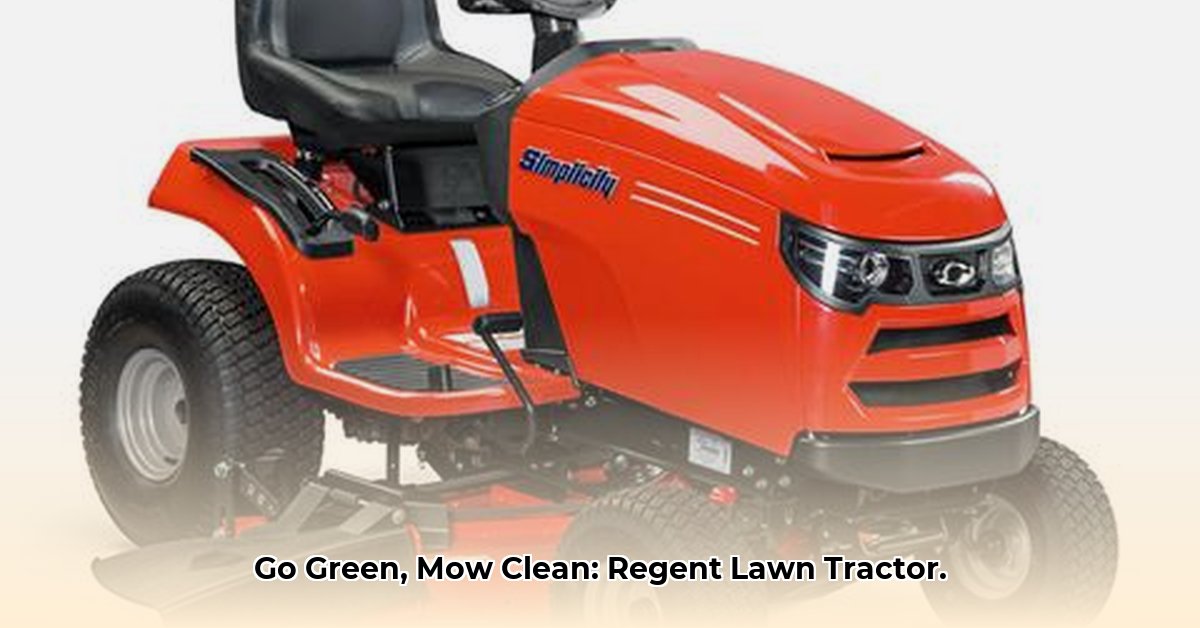
This review assesses the Simplicity Regent lawn tractor's sustainability claims, examining its performance, user experience, and long-term value. We explore whether its features translate into real-world environmental benefits, acknowledging data limitations and calling for greater transparency from Simplicity. For more on lawn tractor types, see this helpful guide.
Features and Performance: A Closer Look
The Simplicity Regent features a unique cutting deck designed for a "scalp-free" cut, minimizing grass stress and potentially reducing the need for chemical fertilizers. Rear rollers produce crisp stripes, enhancing curb appeal. The Briggs & Stratton PXi engine is touted for fuel efficiency, potentially lowering fuel consumption and greenhouse gas emissions compared to older models. LED headlights further contribute to energy savings. The contoured seat and optional suspension system aim for operator comfort, potentially reducing fatigue and improving overall efficiency. However, the absence of quantifiable data on fuel consumption and emission levels prevents definitive conclusions about the engine's actual environmental benefits. Comparative data against competitors, specifically concerning fuel efficiency and cutting-deck performance, would strengthen this assessment.
Sustainability Assessment: A Critical Evaluation
The Regent's "scalp-free" cut potentially reduces lawn stress, lessening the need for chemical treatments. The fuel efficiency of the Briggs & Stratton PXi engine, alongside LED headlights, further suggests environmental advantages. However, a comprehensive lifecycle analysis (LCA) from Simplicity is urgently needed. Without quantifiable data on fuel consumption, emissions, and the entire product lifecycle, a definitive sustainability assessment is impossible. We strongly urge Simplicity to conduct and publish a detailed LCA to substantiate their eco-friendly claims.
User Experience: Comfort and Ease of Use
Operator comfort is a key selling point. The contoured seat and optional suspension system aim to minimize fatigue during operation. However, user feedback is crucial to validate these claims. Anecdotal evidence concerning ease of use, noise levels, and maintenance requirements is currently lacking and should be prioritized for future evaluations.
Long-Term Value and Durability: An Uncertain Future
The Regent's long-term durability remains uncertain. While Simplicity promotes "world-class endurance," verifiable data is absent. Without long-term testing and user feedback on maintenance and repair needs, predicting its lifespan is impossible. A longer lifespan is paramount for sustainability; further testing and transparency from Simplicity are essential.
Conclusion: A Promising Start, But Transparency Needed
The Simplicity Regent displays promising features suggesting improved sustainability compared to older models. The "scalp-free" cut, fuel-efficient engine, and LED lights present potential environmental gains. However, without a comprehensive lifecycle assessment (LCA) and robust user feedback, a definitive verdict on its environmental impact is premature. We recommend a cautious approach, emphasizing the importance of increased transparency and data-driven evaluations before fully endorsing the Simplicity Regent as a truly sustainable solution. While the potential is there, the lack of concrete data prevents a wholehearted recommendation.
Actionable Insights: Moving Forward
- Simplicity's Responsibility: Conduct and publicly release a comprehensive LCA, detailing the Regent's environmental impact throughout its entire lifecycle, from manufacturing to disposal.
- Consumer Actions: Track fuel consumption during lawn mowing and meticulously record any maintenance or repair expenses for future analysis. Consider sharing this data with Simplicity and independent reviewers.
- Independent Verification: Environmental organizations and consumer advocacy groups should request and analyze the LCA to independently verify Simplicity’s claims.
This multi-faceted approach will contribute to a more comprehensive understanding of the Simplicity Regent's true environmental profile and its suitability as a sustainable landscaping solution.